Author Archives: Nooresunnat

shab e barat ki haqeeqat aur dua

Shab e Barat (2026) – Dua And Aamaal For The 15th Night of Shaban

Since we have been receiving a lot of queries on the importance of Shab e Barat, its status in Islam, and how to make full use of it, therefore a brief post is being added that will list the Do’s and Don’ts of Shab e Barat in the light of Sunnah.

For detailed references on each of the points mentioned below, you may refer to the following links:

1) 7 Log Jinki Shab e Barat Main Bhi Maghfirat Nahi Hoti (Audio Bayan)

2) Shab e Baraat Kay Aamaal (Short Audio – Hazrat Maulana Hakeem Akhtar Sahab RA)

3) Shab e Barat Ki Fazeelat Aur Sunnat Tareeqa (Audio Bayan)

4) Shab e Barat Ki Fazeelat (Book by Mufti Abdur Rauf Skaharvi Sahab Db)

5) The Merits of Shabaan and the Night of Bara’ah (by Mufti Taqi Usmani Sahab Db)

Do’s and Don’ts of Shab e Barat 2026:

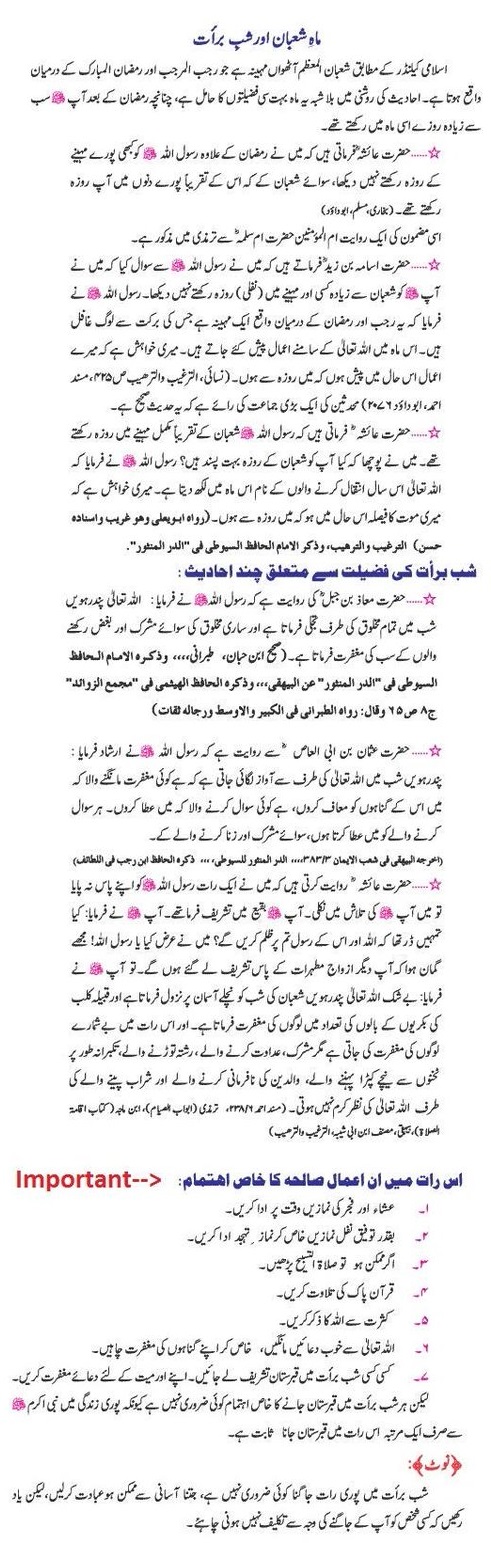
1) 15th Night of Shaban or Shab e Barat, as it is known, is one of the blessed nights in the Islamic calendar.

2) Make sure that you offer all the prayers in the masjid with Jamat. (This should be done on other days as well)

3) Make use of this blessed night by involving yourself in individual nafl prayers. That includes recitation of the Quran, any zikr, praying tahajjud and most importantly, Dua!

4) Make as much dua as possible for the Ummah and for yourself.

5) There is no fixed or particular prayer for this night therefore stay away from any such gatherings where Nafl prayers are being offered in Jamat. Allah(SWT) has granted us this night to get in touch with him personally and individually. We should value this opportunity and avoid gatherings.

6) It is not mandatory at all to stay up the whole night. Pray as much as you can conveniently. After that go to sleep and make sure you offer Fajr Salah in time in the Masjid.

7) You may also visit the graves of your loved ones, as it was done by our beloved Prophet(SAW) as well. However, it is not mandatory. Also, keeping in mind the sort of gatherings that take place at graveyards in these nights, it is sometimes better not to visit as one might get involved in sins.

8 ) Dua is the true essence of this night. Involve yourself in as much dua as you can

Things to be avoided on Shab e Barat:

1) Stay away from Bidat (innovations in religion that are not proven by the Prophet or his Sahaba). Stick to the simple straight path, i-e, the Sunnah.

2) Shab e Baraat has nothing to do with Halwa, Fireworks and other such non-sense.

3) Farz Salah is of much greater importance than any Nafl Prayer. Therefore make sure that we do not stay up so late that we end up missing the Fajr Salah.

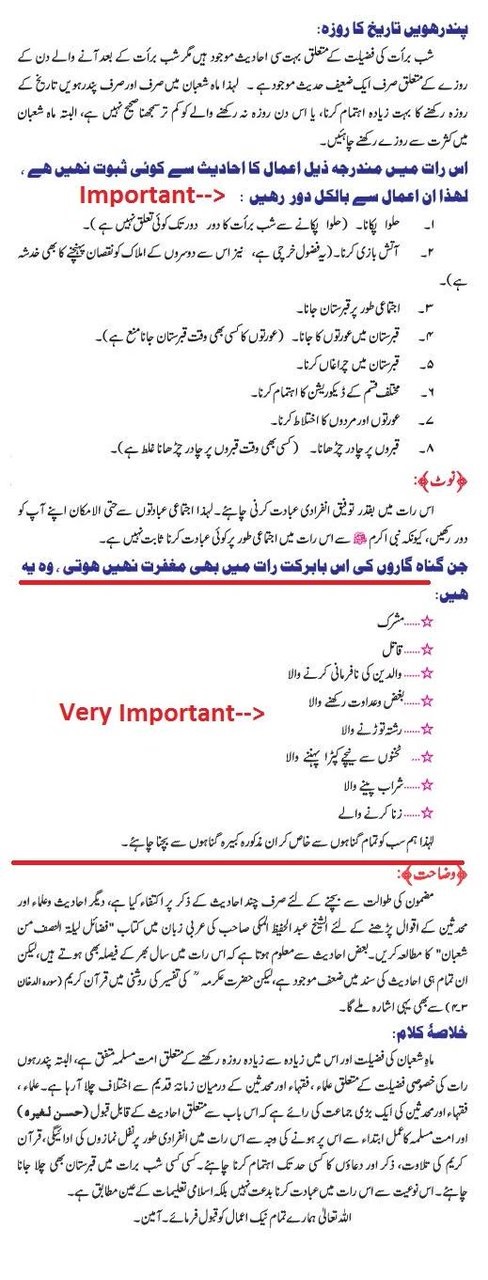
7 Types of People Who Will Not Be Forgiven Even on Shab e Baraat

Following are the types of people who, according to hadith, will not be forgiven even on the blessed night of Shab e Barat (if they do not repent).

However, if someone repents from these sins, then Allah(SWT) is all merciful and will surely forgive him.

1) Mushrik (those who associate partners with Allah).

2) The one who cuts off the ties of kinship (qata’ rehmi).

3) The one who covers his ankles with pants, shalwar or any other garment coming from the top (for men only)

4) The one who is disobedient toward their parents

5) The one who drinks Alcohol

6) The one who kills an innocent Muslim.

7) The one who keeps Keena (enmity) or nourishes malice in his heart for other Muslims.

Shab e Barat Ki Dua, Fazeelat, Aur Aamaal (in Urdu)
shab e barat1

shab e barat2

tafseer mufti zubair ashraf

Tafseer Lectures | Mufti Zubair Ashraf Usmani Sahab Db (Weekly Updated)

Mufti Zubair Ashraf Usmani Sahab (Db) is a distinguished Islamic scholar and a senior teacher at Jamia Darul Uloom Karachi. He is the son of the late Mufti Muhammad Rafi Usmani Sahab (رحمت الله عليه) and carries forward his father’s legacy of Islamic scholarship and guidance.

In 2007, he initiated weekly Tafseer lectures in Urdu every Sunday after Asr prayers at Jamia Masjid Bait ul Mukarram, Karachi.

These sessions provide deep insights into various chapters of the Holy Quran, focusing on their practical application in daily life. His ability to connect Quranic teachings with contemporary issues has made his lectures immensely beneficial for listeners.

Over the years, his Tafseer sessions have built a dedicated audience, with thousands benefiting from his wisdom and explanations.

Alhamdulillah, here at Nooresunnat.com, we’ve recorded most of his lectures over the years. Insha Allah, these lectures will continue to be a source of enlightenment, education, and guidance for seekers worldwide.

May Allah (SWT) accept this effort and enable us to act upon these invaluable lessons.

📥 You can download these lectures by clicking the links in the list of Surahs (Chapters of the Quran) below.

The Complete List Of Audio MP3 Quran Tafseer Lectures By Mufti Zubair Ashraf Usmani

Nikah aur Valima Ki Sunnat Aur Hamare Muashray Ki Buri Rasumat

“سنت کے مطابق نکاح اور ولیمہ، اور ہمارے معاشرے میں رائج رسومات”

حضور اکرمﷺ سے حقیقی عشق و محبت کا تقاضہ ہے کہ ہم اپنے معاشرے، خاندان اور برادری میں رائج رسومات کو ترک کرکے ہر خوشی اور غم کے موقع پر صرف سرور عالمﷺ کی سنت کو اختیار کریں

ان رسومات کی وجہ سے آج ہمارے معاشرے میں زنا کرنا آسان مگر نکاح کرنا انتہائی مشکل ہو چکا ہے

اس سلسلے میں عارف باللہ حضرت مولانا شاہ حکیم محمد اختر صاحب رح کا یہ ملفوظ انتہائی اہمیت کا حامل ہے جسے ہم سب کو پڑھ کر عمل کرنے کا عہد کرنا چاہیے

یہی حقیقی عشقِ رسولﷺ ہے کہ جس وقت معاشرہ حضور ﷺ کی سنتوں کو چھوڑ رہا ہو، ہم انکو اختیار کریں

اللہ تعالٰی ہمیں عمل کی توفیق عطا فرماے

sunnah nikah valima rasam rasumat

Complete Quran MP3 Audio Para-Wise Recording With Urdu Translation by Mufti Taqi Usmani

Listen to the Complete Holy Quran 1 to 30 Para With Urdu Translation by Mufti Taqi Usmani

Audio Version – 30 Para Complete Links Below

Urdu Translation: Mufti Taqi Usmani | ترجمہ: شیخ الاسلام حضرت مولانا مفتی محمد تقی عثمانی صاحب

Book Version (PDF) of Quran Translation: Asan Tarjuma e Quran 

Arabic Recitation: Shaykh Mishari Rashid Al-Afasy | عربی تلاوت: شیخ مشاری راشد العفاسي

Urdu Voice: Hafiz Afzal Mishkat | اردو آواز: حافظ افضل مشکوتہ صاحب

پارہ 1 https://nooresunnat.com/para1
پارہ 2 https://nooresunnat.com/para2
پارہ 3 https://nooresunnat.com/para3
پارہ 4 https://nooresunnat.com/para4
پارہ 5 https://nooresunnat.com/para5
پارہ 6 https://nooresunnat.com/para6
پارہ 7 https://nooresunnat.com/para7
پارہ 8 https://nooresunnat.com/para8
پارہ 9 https://nooresunnat.com/para9
پارہ 10 https://nooresunnat.com/para10
پارہ 11 https://nooresunnat.com/para11
پارہ 12 https://nooresunnat.com/para12
پارہ 13 https://nooresunnat.com/para13
پارہ 14 https://nooresunnat.com/para14
پارہ 15 https://nooresunnat.com/para15
پارہ 16 https://nooresunnat.com/para16
پارہ 17 https://nooresunnat.com/para17
پارہ 18 https://nooresunnat.com/para18
پارہ 19 https://nooresunnat.com/para19
پارہ 20 https://nooresunnat.com/para20
پارہ 21 https://nooresunnat.com/para21
پارہ 22 https://nooresunnat.com/para22
پارہ 23 https://nooresunnat.com/para23
پارہ 24 https://nooresunnat.com/para24
پارہ 25 https://nooresunnat.com/para25
پارہ 26 https://nooresunnat.com/para26
پارہ 27 https://nooresunnat.com/para27
پارہ 28 https://nooresunnat.com/para28
پارہ 29 https://nooresunnat.com/para29
پارہ 30 https://nooresunnat.com/para30